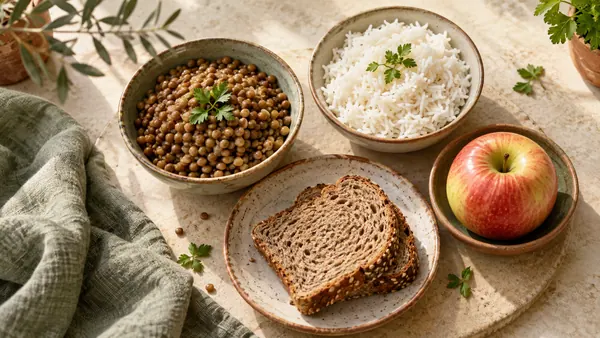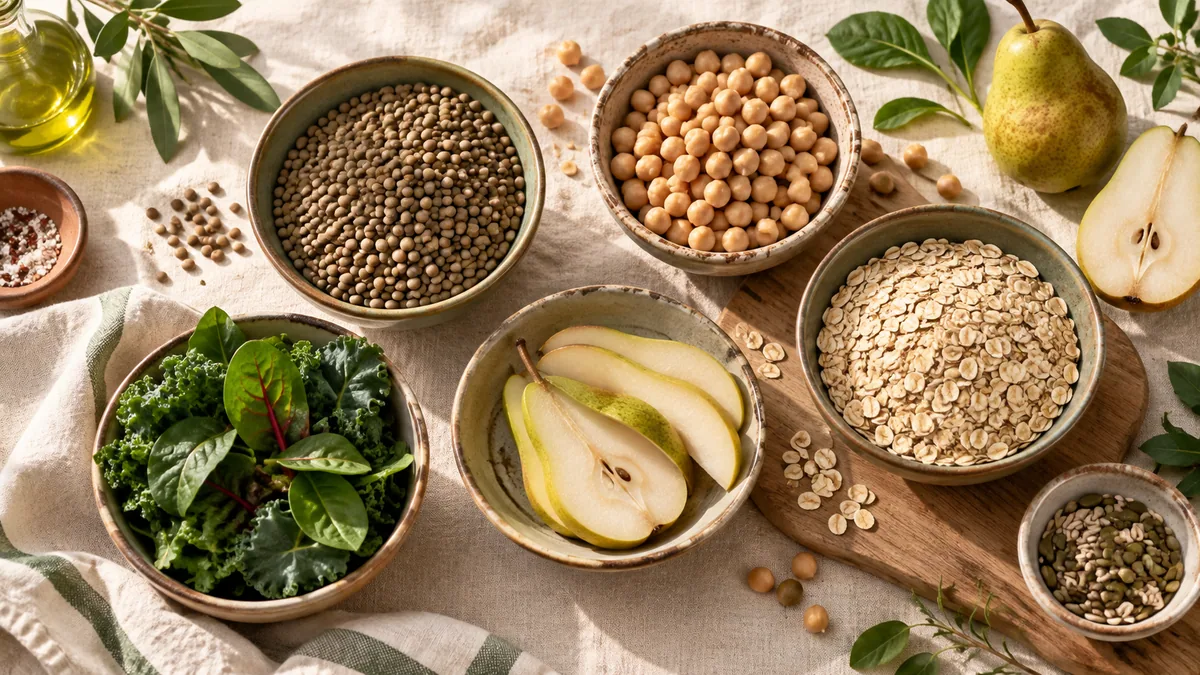
You do not need to replace every meal to increase fibre. First notice where beans, lentils, whole grains, fruit, vegetables and nuts already fit into your routine. Then choose one small change you can repeat.
Which foods provide fibre?
Plant foods are the main sources. Meat, eggs and cheese do not supply fibre, so protein alone does not cover every part of a varied meal. Dark bread is not necessarily whole grain: check the ingredients and compare fibre amounts using the same serving basis.
Three changes to try
- With bread and cheese, try whole-grain bread and a vegetable you enjoy.
- With rice and chicken, add vegetables or a modest portion of cooked beans.
- For a snack, choose whole fruit or nuts if suitable for you.
These are examples, not a required meal plan. If you currently eat little fibre, try one change before adding several more. Whole fruit and juice are different foods; use the matching entry in a food log.
How much is enough?
NIDDK’s constipation guidance gives an adult range of 22–34 g daily, depending on age and sex. Individual digestive conditions and treatment plans may call for different advice. Increase intake gradually with an appropriate amount of fluid.
If symptoms appear
Reduce the size of the change if a sudden increase causes bloating. Keep a brief note of foods, amounts and symptoms rather than attributing every sensation to one ingredient. Severe abdominal pain, blood in the stool, unintentional weight loss or persistent constipation needs assessment.
For meal planning, read about protein in foods and homemade recipe calculations. Do not change prescribed medication or a therapeutic diet based on this general guide.
0Sources for this guide
- Eating, Diet, & Nutrition for Constipation — NIDDK (See source)
- Treatment for Constipation — NIDDK (See source)