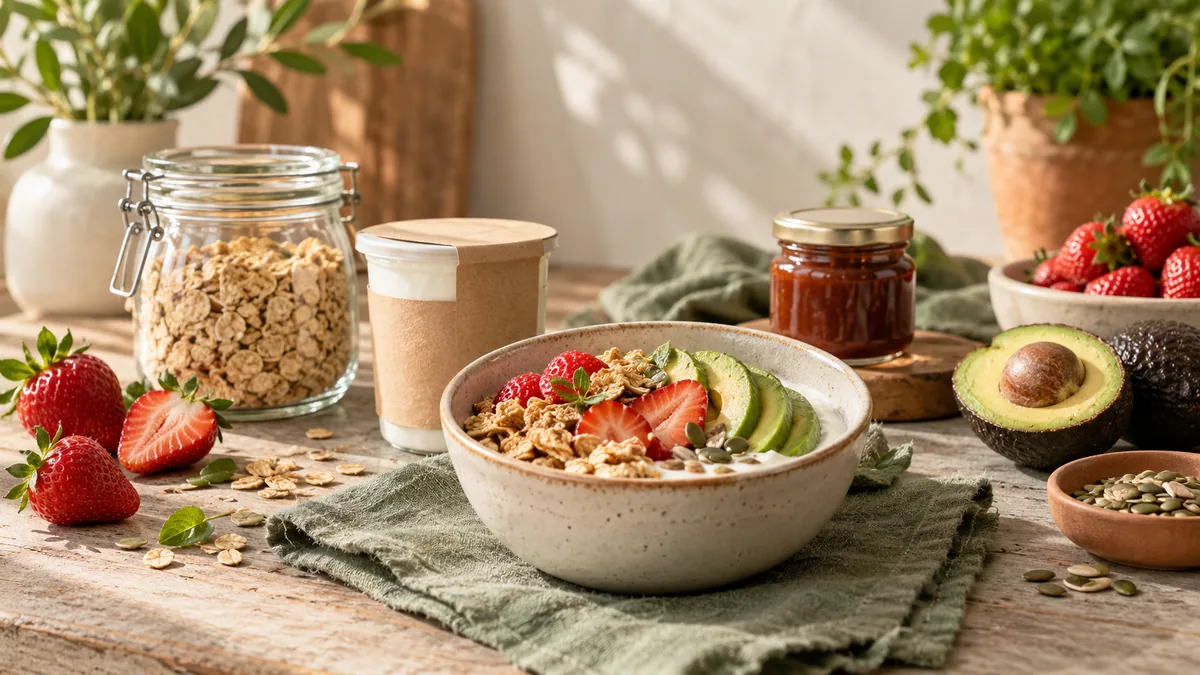
Sugar may appear in drinks, sauces, flavoured yogurt, cereals and other foods. The amount varies by product, so it is more useful to compare labels than to assume every item in a category is high in sugar.
Know which number you are reading
Total sugars and added sugars are not the same measure. Some countries require an added-sugars line; others use different labelling rules. The ingredients list may name sugar, syrups, honey or concentrated sweeteners. Maltodextrin is a carbohydrate ingredient, but should not simply be labelled a synonym for sugar.
Use the same portion
If one label is per 100 g and another is per serving, convert to the same amount before comparing. Then consider the portion you eat. A small suggested serving can make a front-of-pack number look different without changing the product.
Choose one useful comparison
Compare two yogurts or drinks you regularly buy. You may choose a lower-sugar option, a different portion or the same product for enjoyment. The goal is an informed choice, not treating any sugar as a personal failure.
00