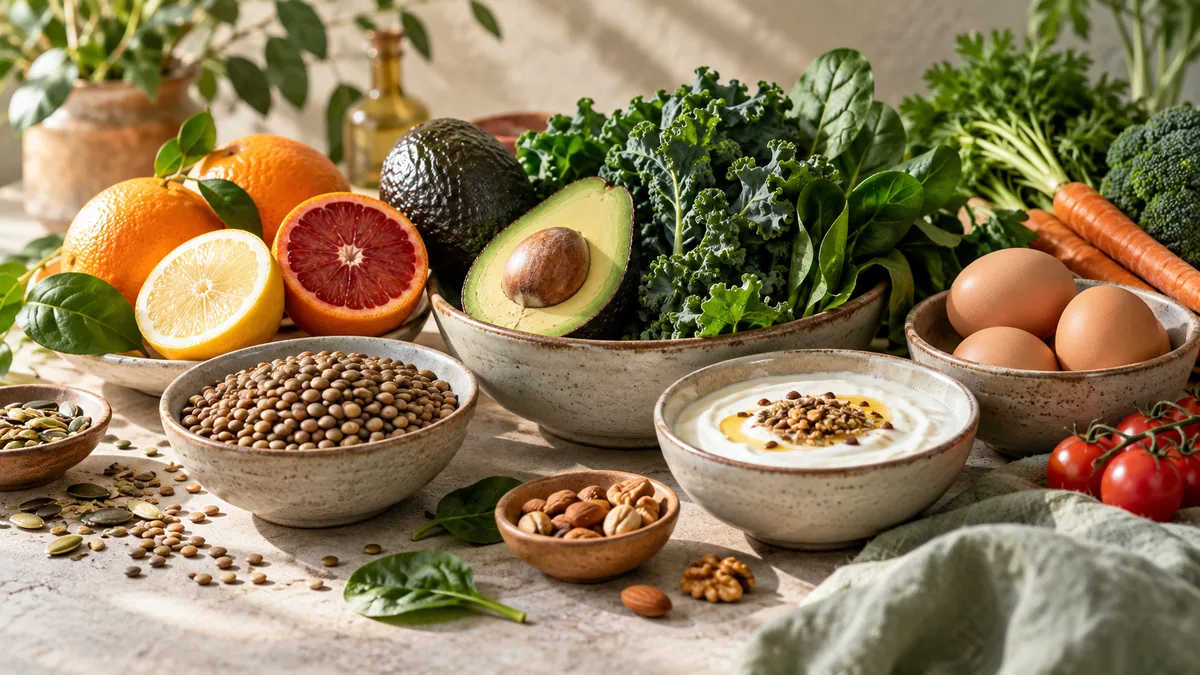
Vitamins and minerals help the body carry out essential processes. Some are involved in using energy from food, oxygen transport or normal nerve and muscle function. That does not mean higher supplemental doses improve those processes indefinitely.
Build variety first
Different foods contribute different nutrients. Vegetables, fruit, legumes, whole grains, nuts, seeds and appropriate protein foods can all have a role. Dietary restrictions, access and health conditions may affect what is practical.
Distinguish a deficiency from a marketing claim
Correcting a diagnosed deficiency is different from taking a “metabolism booster”. Fatigue or difficulty changing weight does not identify a specific missing nutrient. For example, vitamin D is important for health, but supplementation is not supported as a weight-loss treatment.
Use supplements purposefully
Some people need specific supplements because of life stage, diet or medical circumstances. Discuss the need, dose and possible interactions rather than combining products blindly. An app’s nutrient estimate cannot diagnose a deficiency.
Sources: NIH information on vitamin B12 and vitamin D.
00