Many food decisions happen between appointments: choosing lunch, reviewing a recipe or remembering what you ate. An AI companion can make those tasks easier by helping organise information and suggesting a starting point for a log.
Starting and reviewing a meal record
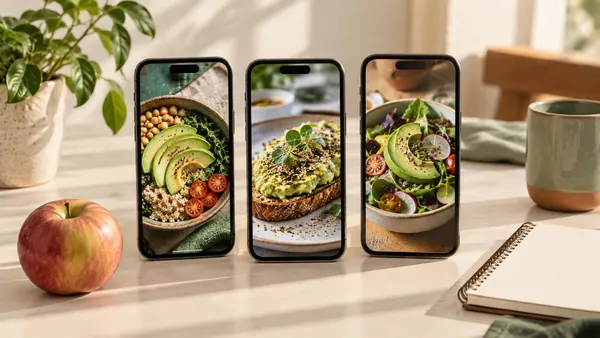
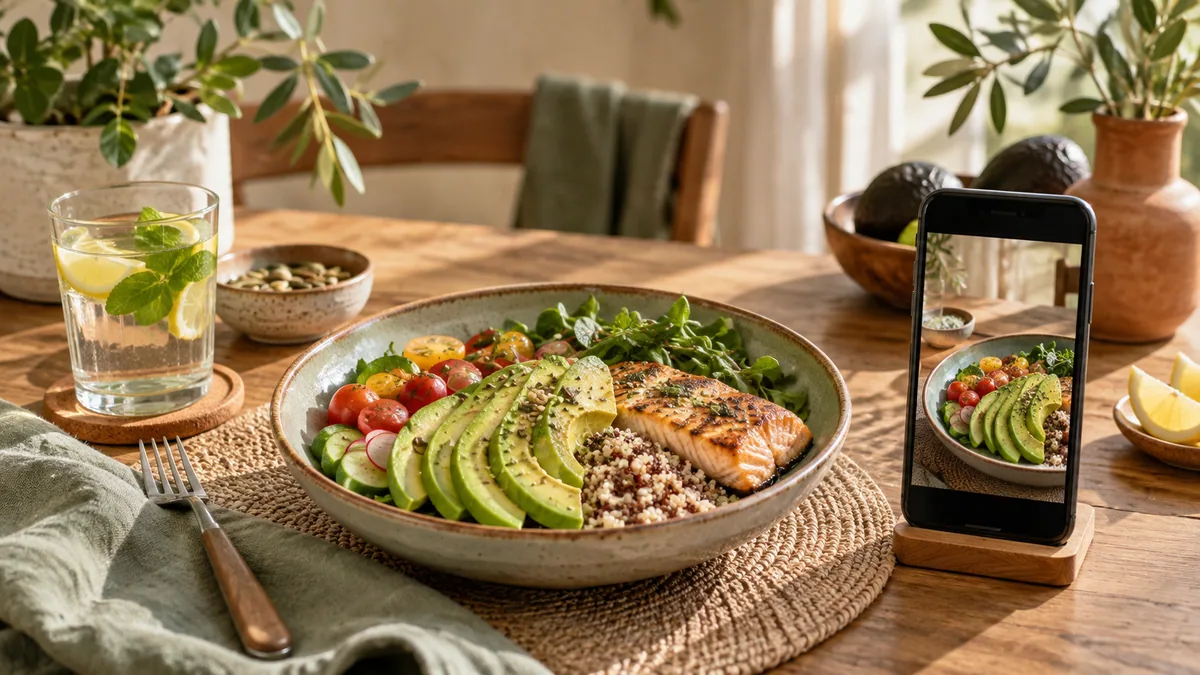
A photo can produce a suggested food and portion, which you then check. The useful workflow includes correction, not just recognition. Hidden oil, mixed recipes and uncertain quantities remain limitations. Our photo-logging guide explains them.
Making a pattern easier to see
A record may help you notice meal timing, variety or whether an entry is incomplete. It does not prove why you feel tired or whether a nutrient deficiency exists. AI can also misunderstand information or generate a confident but incorrect answer.
Turning a broad intention into a small action
A suggestion such as preparing a convenient lunch or adding a vegetable you enjoy is easier to evaluate than “fix your diet”. Treat suggestions as options to assess against your needs, preferences and circumstances, not instructions that must be followed.
Handling real-life uncertainty
Restaurant meals and travel often involve incomplete information. A helpful tool should acknowledge uncertainty rather than invent an exact recipe. For a packaged product, its label may be more appropriate than a generic AI answer.
Where professional care takes priority
Pregnancy, eating disorders, diabetes medication, kidney disease and therapeutic diets require individual assessment. Do not use a general AI response to diagnose symptoms, change medication or calculate insulin. A BMI or calorie calculator is also an estimate rather than a clinical evaluation.
How this applies to Avocado
Avocado offers food logging and related tools; available features and quotas depend on the account and edition. Review the feature guide and Base and Plus information. A useful companion should make everyday tasks clearer without overstating its knowledge or promising a health outcome.
00