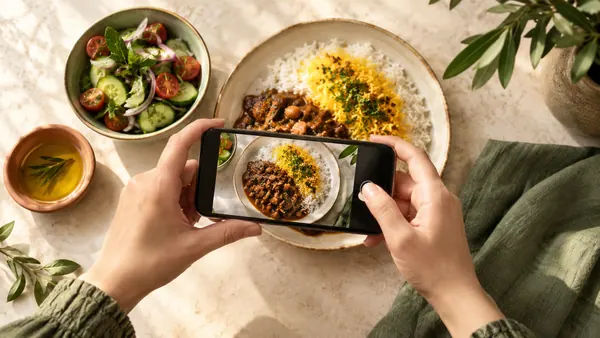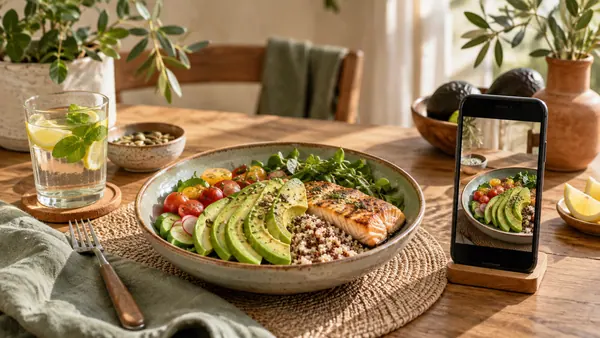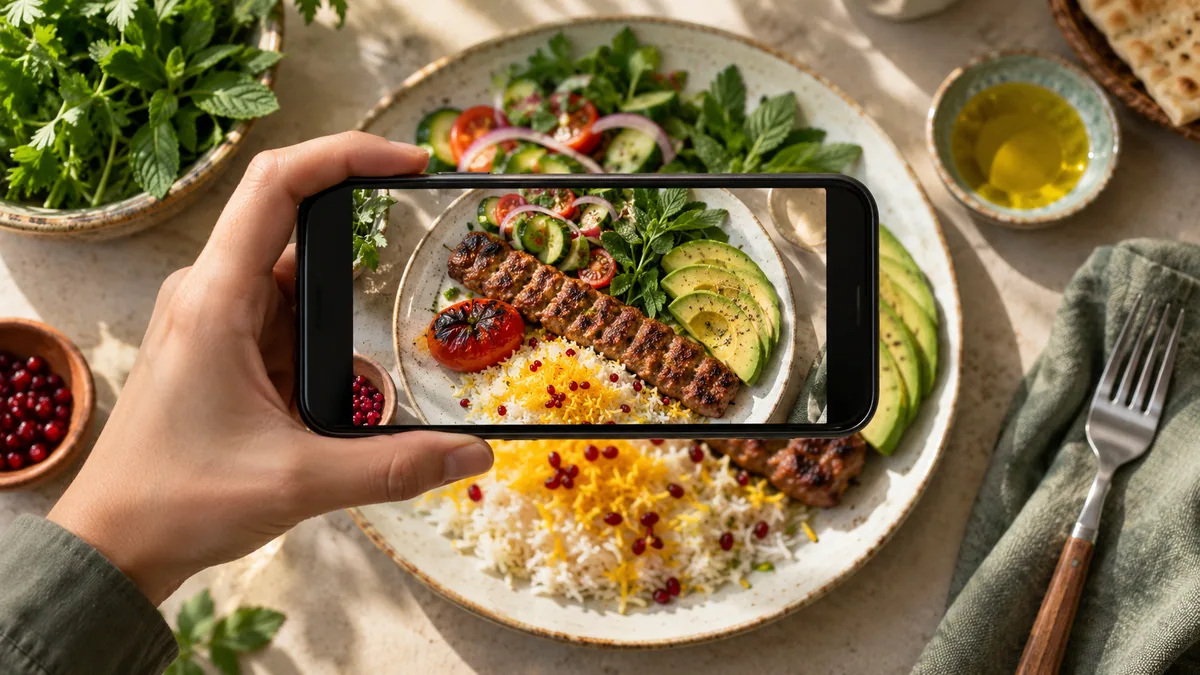
A meal photograph shows appearance, not every ingredient or its weight. Treat the result as an editable estimate. A clear image helps identification, but it does not measure hidden oil or turn a mixed dish into a known recipe.
Four checks before saving
- Food: is the suggested name what you actually ate?
- Preparation: does the entry match raw, boiled, fried or sauced food?
- Portion: does the quantity match what you know about the serving?
- Additions: are oil, butter, sugar, drinks and sides accounted for?
Example: rice and stew
Check the rice and stew separately. If you weighed cooked rice, use a cooked-rice record. For the stew, use the known recipe and serving weight where possible. If oil or ingredients are uncertain, keep that uncertainty rather than inventing an exact number. The plain rice entry cannot describe the whole plate.
When the result looks unexpected
Check units before changing a daily goal. Grams, one item and one serving are different. Raw and cooked weights are different too. For a packaged product, compare the suggestion with that product’s label. Do not resolve a disagreement by choosing the smallest number.
Make the next log easier
Keep a useful recipe name, preparation method and measured serving when they are repeatable. Update them when the recipe changes. For the broader technology and its limits, read the photo calorie counter guide.
00