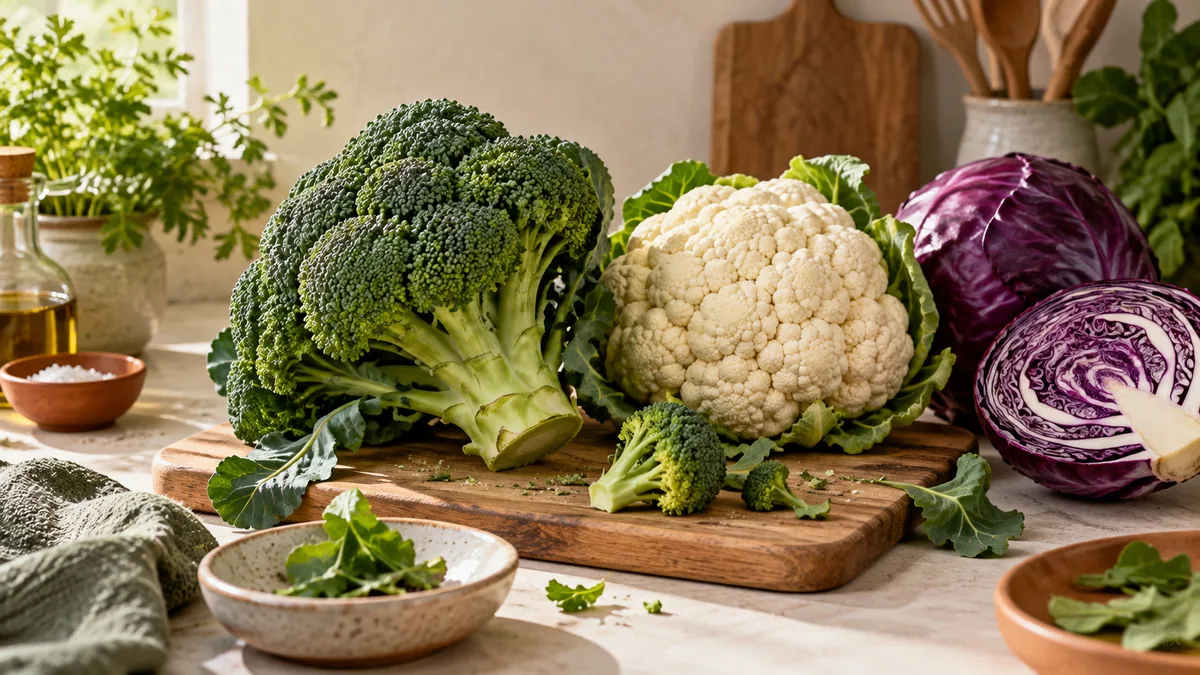
Broccoli, cauliflower, cabbage, kale, Brussels sprouts, radishes and turnips belong to the cruciferous vegetable family. They can be useful parts of a varied diet without being described as a cleanse or a cure.
What research on plant compounds means
These vegetables contain compounds called glucosinolates. Researchers study their breakdown products, but a result in cells or animals does not show that eating a serving of vegetables produces the same effect in people. The National Cancer Institute review describes inconsistent findings from human studies on cancer risk.
Be specific about health claims
“Balances hormones” and “cleanses the liver” do not explain which condition, dose or outcome is being discussed. Ordinary food and a concentrated supplement are different exposures. Do not replace care for a liver or endocrine condition with a vegetable or an extract.
Practical ways to use them
- Serve cooked broccoli alongside a protein source and a grain you enjoy.
- Add cauliflower to a familiar recipe and record the changed ingredients.
- Use shredded cabbage or radish in a salad if you tolerate them.
Variety matters more than forcing yourself to eat one vegetable. If a sudden increase causes discomfort, reduce the change and build up gradually rather than assuming discomfort proves a detox is working.
Log the preparation as well as the vegetable
Plain cabbage and cabbage cooked in oil are different entries. Include sauces and cooking fat unless they are already part of the selected recipe. For more practical examples, see adding fibre gradually and calculating homemade recipes.
0Sources for this guide
- Cruciferous Vegetables and Cancer Prevention — National Cancer Institute (See source)