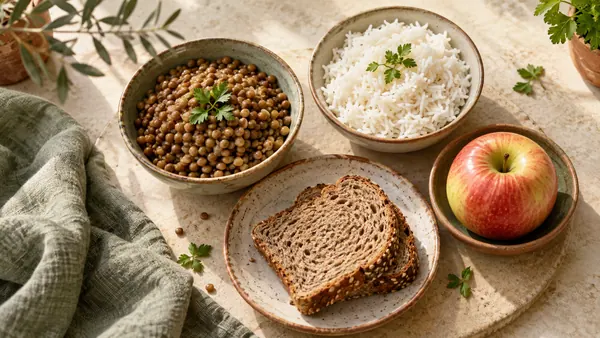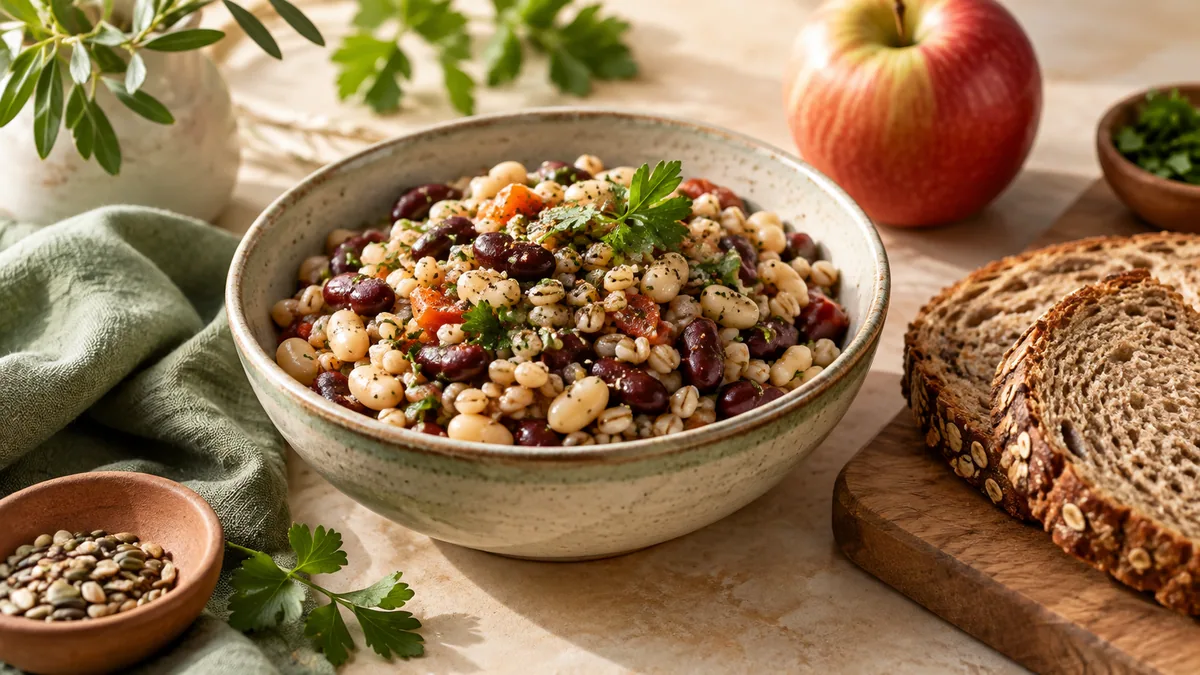
Fibre occurs in plant foods including beans, lentils, vegetables, fruit, nuts and whole grains. Different types have different properties; a food’s effect cannot be predicted from one “high fibre” claim alone.
Look at the whole meal
The amount and type of carbohydrate, portion, preparation and individual response all affect blood glucose. Adding fibre does not cancel the rest of a meal or turn it into a treatment. If you monitor glucose, use the plan agreed with your care team rather than an app’s prediction.
Choose one manageable change
- Add a small portion of lentils or beans to a familiar meal.
- Try a whole-grain option and compare the label.
- Include whole fruit or vegetables that you enjoy.
Increase fibre gradually and drink an appropriate amount of fluid. A sudden increase can cause bloating. Medical conditions may require specific advice about fibre, carbohydrates or fluids.
If you use diabetes medication
Keep following your treatment and monitoring plan. Discuss substantial changes to diet or meal timing with your clinician. A fibre supplement should not replace medication.
Quantity and variety
Daily recommendations vary with age and other circumstances. The practical fibre guide explains food sources and gradual changes. For evidence on diabetes management, see the systematic review of dietary fibre and whole grains. Population findings are useful context, not a personalised prescription.
0Sources for this guide
- Healthy diet — World Health Organization (2026)
- Dietary Reference Intakes: Summary Tables for Water, Macronutrients and Fibre — National Academies / NCBI Bookshelf (2003)
- Dietary fibre and whole grains in diabetes management: systematic review and meta-analyses — PLOS Medicine / PubMed (2020)